


The wiping stick is a kind of dust-free wiping consumable used in industry. Mostly used in electronics, semiconductor industry, corners, cracks, flat wipe (also some call it, cotton swabs, purified cotton swabs, anti-static cotton swabs, sponge sticks, etc.)
Why Choose Us
Innovation
We are at the forefront of technological advancements, constantly developing cutting-edge solutions to meet the evolving needs of our clients.
Customization
Our team of experts provides tailored services to address specific challenges, ensuring each solution is unique and perfectly suited to the client's requirements.
Quality Assurance
We adhere to stringent quality control processes to deliver reliable and high-performance products that exceed industry standards.
Experienced Team
Our staff comprises seasoned professionals with extensive experience in technology development, offering deep expertise in a wide array of tech domains.
What is Cleanroom Swab?
A cleanroom swab is a specialized cleaning tool used in controlled environments such as cleanrooms, laboratories, and manufacturing facilities where maintaining a high level of cleanliness and eliminating contaminants is essential. Cleanrooms are environments with low levels of airborne particles and other pollutants to ensure the integrity of sensitive processes, products, or experiments.
-
![ESD Sticky Swab]()
-
![Gel Sticky Swab]() Gel Sticky SwabGel Sticky Swab construction high temperature resistant elastic polymer gelread more
Gel Sticky SwabGel Sticky Swab construction high temperature resistant elastic polymer gelread more -
![ESD Safe Swab]()
-
![ESD Safe Foam Swabs]()
-
![Lint Free Swabs]()
-
![ESD Cleaning Swabs]()
-
![ESD Foam Swab]()
-
![ESD Swab]()
-
![ESD Swabs]()
-
![Cleanroom Polyester Swabs]()
-
![Polyester Swab]()
-
![Clean Swab]()


What Are The Uses Of Cleanroom Swabs?
Electronics Manufacturing: Cleanroom swabs are extensively used in the electronics industry for cleaning delicate electronic components, printed circuit boards (PCBs), and other sensitive equipment during assembly, testing, and maintenance processes.
Pharmaceutical and Biotechnology: In pharmaceutical and biotech cleanrooms, swabs are used to sample surfaces and equipment to ensure proper hygiene and prevent cross-contamination.
Aerospace and Defense: Cleanroom swabs are employed in aerospace and defense applications for cleaning critical components, optics, and precision instruments to maintain performance and reliability.
Medical Device Manufacturing: During the manufacturing of medical devices and equipment, cleanroom swabs are utilized to ensure proper cleanliness and quality of the products.
Optics and Photonics: In the optics and photonics industry, where precision is crucial, cleanroom swabs are used to clean lenses, mirrors, and other optical components without scratching or damaging them.
Semiconductor Industry: Cleanroom swabs are widely used in the semiconductor manufacturing process to clean and maintain the purity of wafers, chambers, and other semiconductor equipment.
Automotive Manufacturing: In automotive manufacturing facilities, cleanroom swabs are used for cleaning sensitive electronic components, sensors, and precision parts.
Food and Beverage Production: In the food and beverage industry, cleanroom swabs are used to monitor and maintain cleanliness in processing equipment and packaging areas.
Printers and Print Head Maintenance: Cleanroom swabs are employed to clean print heads and other critical components in printers, ensuring consistent print quality.
Laboratories: In research and analytical laboratories, cleanroom swabs are used for sampling, cleaning, and handling sensitive instruments and equipment.
Foam Swabs: Foam swabs are made from polyurethane foam, which has excellent solvent compatibility and high absorbency. These swabs are ideal for cleaning delicate surfaces, applying solvents, and removing excess residues. Foam swabs come in different sizes and shapes to address various cleaning needs.
Polyester Swabs: Polyester swabs are constructed from a synthetic material that has low particle generation and good chemical resistance. These swabs are often used in precision cleaning applications, particularly in sensitive electronic components and hard-to-reach areas.
Microfiber Swabs
Microfiber swabs are designed to trap and remove microscopic particles effectively. They are often used in cleaning sensitive optical surfaces, camera lenses, and other high-precision equipment.
Cotton Swabs
Cotton swabs, also known as cotton-tipped swabs, have a cotton tip attached to a plastic or wooden handle. They are commonly used in less critical cleanroom environments for general cleaning and application of solutions.
ESD-Safe Swabs
Electrostatic discharge (ESD)-safe swabs are designed to prevent damage to sensitive electronic components that could be harmed by static electricity. These swabs are usually constructed with conductive materials that dissipate static charges.
When choosing a cleanroom swab, there are a few product attributes to consider. One important and common focus in every cleanroom is to limit airborne particulate. The proper swab should be chosen to ensure the environment is not compromised. The following are some factors to consider when selecting a cleanroom swab:
Absorption capacity: The swab should be able to absorb the cleaning agent or liquid contaminants that it will be used on.
Linting: The swab should not leave any residue or fibers that could contaminate the surface being cleaned.
Abrasiveness: The swab should not scratch or damage the surface being cleaned.
Chemical resistance: The swab should be able to withstand the chemical agents it will be used with.
Electrostatic discharge (ESD) properties: The swab should not generate static electricity that could damage sensitive equipment.
Cleanroom swab handles can be made of different materials, including wood, polypropylene, and paper. Each material has its own benefits and applications. Paper is stiff, clean, and makes for a “green” tip-to-toe construction. However, it contains particulates, so it is not typically recommended for cleanrooms.
Cleanroom swab tips come in varying shapes, including pointed, rectangular, and corkscrew, to aid users in specific cleaning or application tasks. The option selected will depend upon the need for absorption of cleaning agents or liquid contaminants, allowable abrasiveness and potential for linting, and other features. Foam swabs are known for their high absorbency and low-linting properties. Cotton swabs are good for general cleaning, while microfiber swabs are ideal for cleaning small parts or difficult-to-reach areas.
Cleanroom swab manufacturers are continually identifying and evaluating new swab fabrics and materials, as well as working to improve the efficiency, quality, and cleanliness of their production processes. The major swab and wipe suppliers do not themselves manufacture materials, which means they must rely largely on the development efforts of textile and foam suppliers. Given the relatively small size of the market, cleanroom applications do not get the lion`s share of research attention from these companies. Instead, wipe manufacturers largely meet critical cleanroom requirements through value-added processing of conventional materials in controlled environments, principally, proprietary laundering processes.
In conclusion, when using cleanroom swabs, it is essential to choose swabs that meet the specific needs of the application. Cleanroom swabs are specially formulated to reduce the potential for lint and other residue, among other specialized features. When choosing a cleanroom swab, the swab tip and shaft material should be considered, as well as the absorption capacity, linting, abrasiveness, chemical resistance, and ESD properties. Foam swabs are known for their high absorbency and low-linting properties, while cotton swabs are good for general cleaning. Cleanroom swab manufacturers are continually identifying and evaluating new swab fabrics and materials, as well as working to improve the efficiency, quality, and cleanliness of their production processes.

Cleanroom swabs are specialized tools used in cleanroom environments to clean and maintain sensitive equipment and surfaces. These swabs are designed to remove contaminants and particles without leaving any residue, ensuring optimal performance and cleanliness in industries like pharmaceuticals, electronics, aerospace, and healthcare.
The global cleanroom swabs market is witnessing significant growth due to various factors. One of the primary drivers is the increasing demand for cleanliness and hygiene in critical environments. With the advancement of technology and the growing focus on precision manufacturing, there is a rising need for contamination control, thereby driving the demand for cleanroom swabs.
Additionally, the implementation of strict regulations and standards across different industries, such as ISO 14644-1 for cleanrooms, has further fueled the market growth. Cleanroom swabs are crucial in maintaining compliance with these regulations.
Moreover, the expanding semiconductor industry, particularly in developing regions like Asia-Pacific, is expected to drive the demand for cleanroom swabs. The semiconductor industry requires stringent contamination control measures, creating a substantial market opportunity.
Furthermore, the increasing number of healthcare facilities, pharmaceutical production units, and research laboratories is also contributing to the market growth. The need for cleanroom swabs to ensure sterility and cleanliness in these environments is propelling the demand.
In terms of market trends, there is a growing focus on the development of innovative swab materials and designs. Manufacturers are investing in research and development to introduce swabs with improved features like enhanced absorbency, reduced shedding, and better chemical resistance.
Overall, the cleanroom swabs market is poised for significant growth in the coming years, driven by the increasing demand for cleanliness and contamination control in critical environments. The market is expected to grow at a CAGR of % during the forecast period.
Most Important Features When Choosing a Swab For Critical Cleanroom Swab
Material
The material of the swab should be compatible with the cleaning agent being used and the surface being cleaned. Common swab materials include foam, polyester, cotton, and microfiber.
Size and shape
The size and shape of the swab should be appropriate for the surface being cleaned and the area that needs to be reached.
Tip design
The tip of the swab should be designed to effectively clean the surface. Some common tip designs include pointed, rounded, and chiseled.
Absorbency
The swab should be able to absorb the cleaning agent without leaving residue or lint on the surface.
Strength
The swab should be strong enough to withstand the pressure needed to effectively clean the surface without breaking or shedding fibers.
Sterility
If the cleaning process requires sterile conditions, the swab should be sterilized or packaged in a sterile environment.
Traceability
The swab should be easily traceable to ensure that the cleaning process is consistent and reliable. This is particularly important in critical cleaning applications where traceability is required for compliance with regulations or standards.
Packaging
The swab should be packaged in a way that maintains its cleanliness and prevents contamination during storage and transportation. This can include individual packaging or bulk packaging in sealed bags or containers.
Choosing the right cleanroom swab handle
Polypropylene shafts
Polypropylene swabMolded or extruded options are available
Can be glass-filled for extra rigidity
Can be blended with carbon for conductivity
Can be blended with inherently static-dissipative polymers
Paper shafts
Compressedpaper swab
Stiff
Biodegradable
Most often used with compressed cotton/lint-free tips
Used in manufacturing disk drives
The paper is stiff, clean, and makes for a “green” tip-to-toe construction
Wood shafts
Northern white birch
A “natural” materialwood swab
Rigid
Contains particulates, so not typically recommended for cleanrooms
Choosing The Right Cleanroom Swab Tip Material
Soft, non-abrasive, and lint-free
Can easily withstand IPA, acetone, and other solvents
Non-absorbent
Low particle generation and low non-volatile residues (NVRs)
Made in a Class 1000 cleanroom
Ideal for cleaning electronic and communication devices and perfect for instrumentation and medical device manufacturing
Soft and non-abrasive
Low particle generation and low NVRs
Absorbent
Resistant to normal cleaning solvents, which makes them ideal for removing contaminants and excess materials in fine assembly environments
The fiber is made from denier thread smaller than polyester
Suitable for cleanrooms, fiber-optics, and component manufacturing
Synthetic – polyurethane foam
100 PPI provides good particle entrapmentfoam tip
Options include open-cell, closed-cell, dissipative, highly absorbent, and chemical-resistant styles
Non-linting, making it good for removing epoxy residue from connectors, in general cleaning, or as a flux remover
Thermal edge seals and thermal bonding to the handle helps ensure the sponge-like foam will clean up unwanted particles without releasing any into your environment
Made from shred-resistant urethane foam over USP foam over cotton tippharmaceutical-grade cotton for the best absorption that performs well when cleaning with solvents
Friction bond
Foam over cotton holds up better under vigorous use than stand-alone cotton
Extra absorption
Made of a unique polymer that stands up to most solvents and aggressive chemicals (including acetone)
Used for general cleaning, removing and applying adhesives and other solutions
The slight texture of the foam creates a light abrasion
To prevent electrostatic discharge (ESD) and static buildup electronics and other sensitive devices should only be cleaned with ESD and/or anti-static swabs
Designed for working in and around static-sensitive components and parts
Anti-static applicators are made with an anti-static foam tip and a conductive polypropylene handle or standard wood handle
ESD applicators are made with anti-static handles and have unique tips, some are made of ESD conductive foam, polyester, cotton, and non-woven materials
Non-linting and residue-free
Soft
Some offered in anti-static packaging
Typically double-tipped
Used in HDD manufacturing
Suitable for cleanrooms
Smallest tips starting at 2 mm
Bulb and pointed styles
Certifications

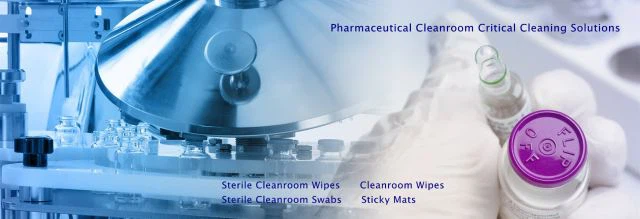
Manufacture and export of sterile cleanroom wipes,pre-saturate cleanroom wipes,cleanroom wipes,anti-static cleanroom wipes,cleanroom swabs, cleanroom paper, sticky mat, sticky roller, cleanroom notebooks, anti-static cleanroom garments, antistatic packaging bags, pharmaceutical sterilized consumable and many more. These products are widely applied in the biologics, pharmaceutical, microelectronics,semiconductor,precision optics,precise instruments, aerospace, automobile, electronic, photovoltaic and other related industries.
FAQ
Q: What is Cleanroom Swab?
Q: What is a cleanroom swab?
Q: What is swab in microbiology?
It is intended for recovery of aerobic, anaerobic and fastidious bacteria. Other types of swabs are used for suspected chlamydial and viral infections, and where the sampling site requires a more specialised swab, such as the ear or naso-pharynx.
Q: What is the swab test for cleaning validation?
Q: What are the requirements for ISO 8 clean room testing?
An ISO 8 or Fed-Std 209E class 100,000 cleanroom must have 3,520,000 particles per cubic meter or less ≥0.5 µm sized particles, 832,000 particles per cubic meter or less ≥1 µm sized particles, and 29,300 particles per cubic meter or less ≥5 µm sized particles.
Q: What is the purpose of swab method?
Q: Why is the swabbing important?
Q: What are the advantages of swab sampling for cleaning validation?
Q: What is the procedure of swab method?
Q: How do you swab for cleaning validation?
Q: What defines a sterile swab?
Q: What are sterile swabs made of?
Q: What is the swab test for cleaning validation?
Q: What is the swabbing procedure in cleaning validation?
Q: What precautions should be taken when handling cleanroom swabs?
Q: How do I select the right cleanroom swab for my application?
Q: What is the typical process for using a cleanroom swab for microbial detection?
Q: How should cleanroom swabs be stored and how long do they last?
Q: What are the steps involved in the microbiological analysis of a cleanroom swab sample?
Q: How to do an environmental swab?
Hold the swab handle to make a 30 ° angle contact with the surface. Rub the surface slowly and thoroughly over approximately 50 cm2 of the surface three times, reversing direction between strokes. After the area has been swabbed, using aseptic technique, return the swab to the vial.
Smartet Technology Development Co., Ltd. is known as one of the most professional cleanroom swab manufacturers and suppliers in China. Feel free to wholesale quality cleanroom swab in stock here from our factory. We also support customized service, welcome to check quotation with us.
Blue Foam Cleanroom Swab, Blue Foam Cleanroom Swab SSHT1701 5, Blue Foam Cleanroom Swab SSHT1701